Area Real Estate News & Market Trends

You’ll find our blog to be a wealth of information, covering everything from local market statistics and home values to community happenings. That’s because we care about the community and want to help you find your place in it. Please reach out if you have any questions at all. We’d love to talk with you!

March 3, 2026

Top Mistakes Homeowners Are Making in 2026 (And How To Avoid Them)

Let’s be clear: selling your house is absolutely possible right now. According to the National Association of Realtors (NAR), roughly 11k homes sell every day in this country.

And the sellers who are making their moves happen all have one thing in common: they’ve adjusted their strategy to match today’s market. They’re realizing inventory has grown. Homebuyers are more selective. And buyer expectations are higher.

The sellers who struggle are usually approaching today’s market with yesterday’s expectations. Here are the three biggest mistakes they’re making – and how to avoid them.

1. Pricing Based on What Their Neighbor Got a Few Years Back

Setting your price is the most important decision you make when you sell – and the one that’s most often mishandled. Realtor.com data shows almost 1 out of 5 sellers in 2025 had to drop their price. Here’s what those sellers went wrong.

Buyers have more choice and more negotiating power now that inventory has grown. And house hunters will actively avoid your house is if feels like it’s priced too high. That’s why overpricing usually leads to:

  • Fewer showings
  • Less competitive (or lowball) offers
  • Longer time on market

And all three of those side effects are things you don’t want to deal with.

What To Do Instead: The good news is the cure is simple. Just price for today’s buyer, not yesterday’s headlines. Lean on your agent’s knowledge of recent comparable sales, current competition, and local buyer behavior to land in the value “sweet spot” that drives traffic and urgency from day one.

2. Trying To Skip Repairs That Buyers Now Expect

A few years ago, you could sell as-is and still get well above asking. Today? Not so much. Right now, NAR says two-thirds of sellers are making at least some repairs.

And the reason why is simple. In a market with more inventory, buyers compare homes side by side. Homes that don’t show well (or feel dated) are going to lose attention quickly, even if the issues are minor. 

What To Do Instead: Ask your agent which high-impact, low-stress updates they’d recommend for your house. The goal isn’t perfection. It’s helping buyers see themselves moving in without a mental to-do list. Small investments in staging, repairs, and curb appeal can make a huge difference in how quickly offers come in – and how strong those offers are.

3. Playing Hardball When Buyers Try To Negotiate

Today’s buyers have housing affordability at the top of their minds. And since money is already tight, they’ll be pickier and will probably ask for some compromises from you. Whether that’s making repairs, giving them a credit at closing, or taking just a few thousand dollars off your asking price, negotiating is normal again.

So, if something pops up in the inspection, you’re going to need to be open to talking about it. If you’re not, you may very well see your buyer walk away. And some sellers are figuring this out the hard way. Redfin data shows one of the big reasons home sales fell thru in 2025 was inspection or repair issues. Odds are those homeowners weren’t willing to flex a bit to get the deal done.

What to Do Instead: Meet with your agent to make sure you understand what buyers in your area care the most about. Align your price with value, present the home clearly and confidently, and stay open to reasonable negotiations that keep deals moving forward.

For more information visit: keepingcurrentmatters.com
Feb. 11, 2026

3 Reasons To Buy A Home THIS Spring

If you’re planning to buy a home this year, you may be focused on the spring market. And hoping that when spring does hit, you’ll see:

  • Mortgage rates drop a little more.
  • More homes hit the market.

But here’s what most buyers don’t realize. Buying just a few weeks earlier could mean paying less, dealing with less stress, and feeling less rushed.

Here are three reasons why accelerating your timeline over the next few weeks could actually be a better play.

1. Holding Out for Lower Rates May Not Pay Off 

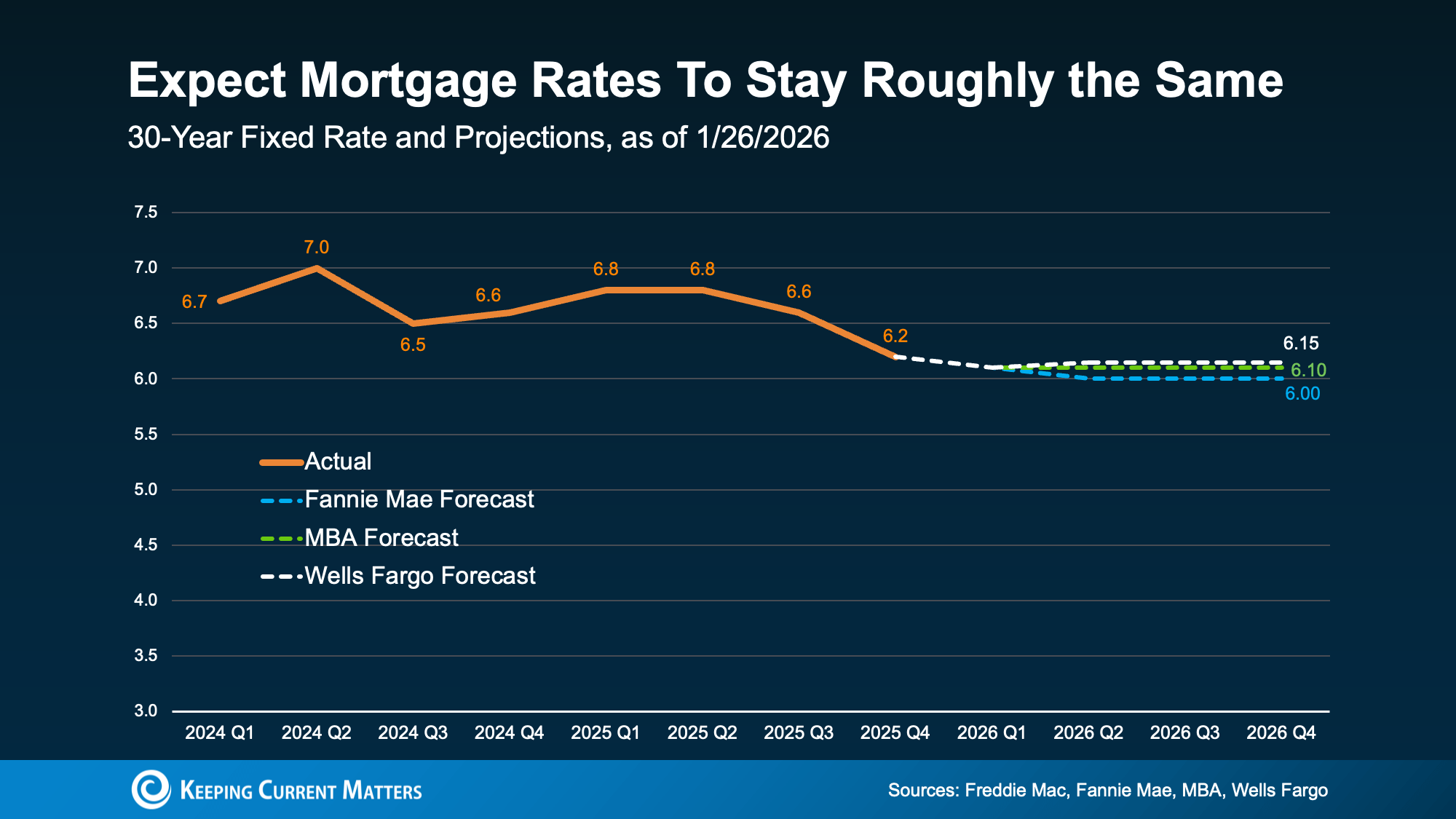
A lot of buyers are hoping mortgage rates will fall even further. But that’s not the best strategy. Here’s why. Experts are pretty aligned on this: rates are expected to stay roughly where they are.

Forecasts throughout the industry all point to the same thing: rates are projected to be in the low-6% range this year (see graph below)

a graph of a graph showing the rate of a mortgageThat’s not a bad thing, especially if you consider how much rates have already come down. Over the past 12 months, they’ve dropped roughly a full percentage point. And for many buyers, that means affordability has already improved more than they may realize. 

So why wait a few more weeks just for more buyers to jump in and act as your competition? You already have a window right now. As Chen Zhao, Head of Economics Research at Redfin, explains:

“House hunters should know that this may be near the lowest mortgage rates fall for the foreseeable future.”

2. Spring Means More Competition + More Stress

Speaking of competition, the spring market is popular for a reason, but with popularity comes pressure. With more buyers active at that time of year, you’ll have to move faster once you find a home you like. And no one likes feeling rushed.

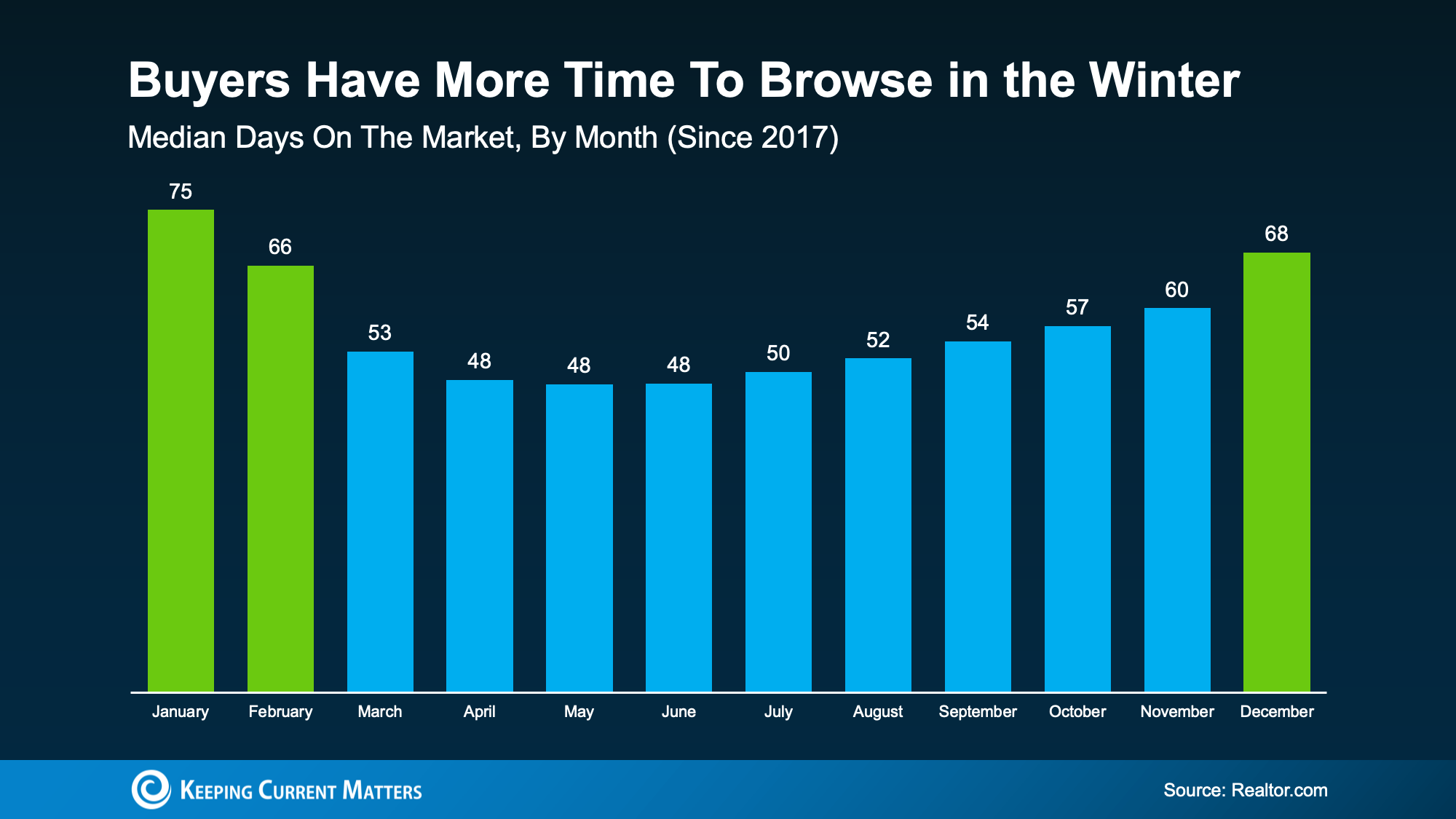
But buy now and you have more time to browse. Fewer people are looking, so homes sit longer.

You can see this play out in the data from Realtor.com (see graph below). In winter months, it takes an average of about 70 days for a home to sell. In spring? That drops to about 50 days. That’s a 20-day swing – and that pace is going to be more stressful.

Homes sell faster in the spring, and slower in the winter. And that can be a worthwhile perk for buyers who want to get ahead before their decisions start to feel rushed.
3. Prices Tend To Rise When Competition Heats Up

And here’s something most buyers forget to factor in. Prices usually respond to demand. So, when demand is higher, prices are too. Bankrate explains:

“Spring and early summer are the busiest and most competitive time of year for the real estate market . . . home prices tend to be steeper to reflect the increased demand.” 

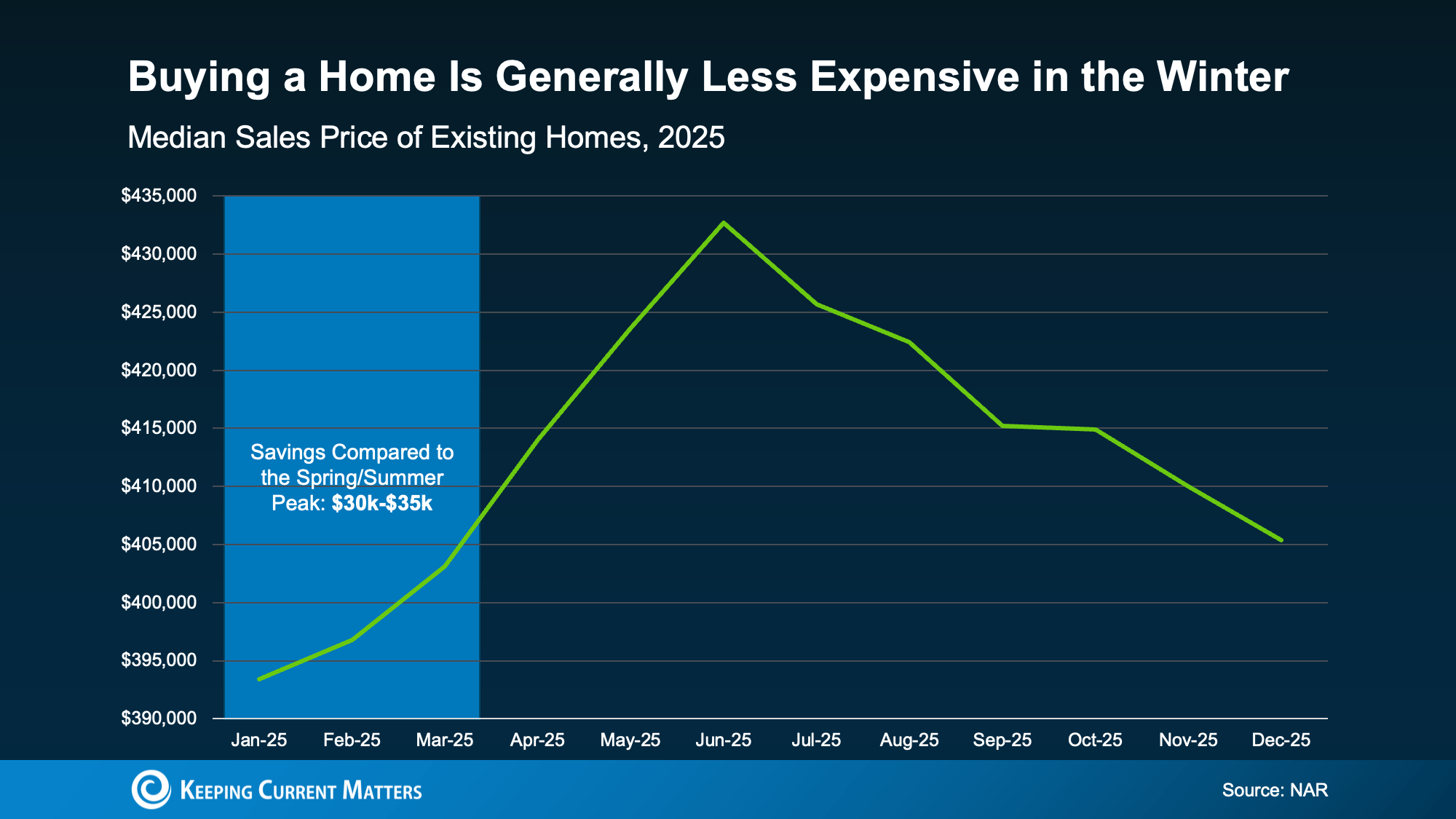
In fact, data from the National Association of Realtors (NAR) shows that in 2025, buyers who purchased in the beginning of the year saved roughly $30,000–$35,000 compared to those who bought when prices peaked in the spring or early summer.

a graph with a green lineAnd let’s be honest, for a lot of buyers today, every little bit of savings helps. That’s why buying just a few weeks earlier, before prices ramp up, will be better for you and your wallet.

**MORE INFORMATION AT: keepingcurrentmatters.com**

Feb. 5, 2026

Good News for Homebuyers: Affordability Is Improving!

After several tough years of rising costs and high mortgage rates, buying a home is finally becoming a bit more affordable — and that’s meaningful news for buyers who’ve been sitting on the sidelines.

📉 What’s Driving the Improvement
Here are the key trends helping affordability:

  1. Lower Mortgage Rates – Rates have eased to their lowest levels in years, which reduces monthly payments compared with recent peaks.

  2. Slower Home Price Growth – Prices aren’t dropping, but they’re rising more slowly, so buyers aren’t facing the sharp jumps seen in prior years.

  3. Wages Growing Faster Than Prices – Because income is rising quicker than home prices, buyers’ purchasing power is improving — even if rates don’t fall dramatically.

Industry economists, like Mark Fleming from First American, explain that when income growth outpaces price increases, affordability improves — even in a world of moderate mortgage rates.

📊 Still Not Easy — But Moving in the Right Direction
Homeownership isn’t inexpensive yet — most buyers still spend more than the traditional affordability benchmark (about 30% of income), but the gap is closing and the trend is positive.

📍 What This Means for Buyers
Affordability is improving in many markets, and some areas may even meet traditional affordability standards more consistently by year-end. That means now is a good time to revisit the market if you’ve been paused by higher costs — and talking with a local agent about your specific area may reveal opportunities you didn’t see before.

Feb. 3, 2026

Home Insurance Costs Are Rising: What Buyers Should Plan For

Buying a home is one of the biggest purchases you’ll ever make. And homeowner’s insurance is what protects that investment. Think of it as your safety net. NerdWallet explains it:

  • Covers Repairs and Rebuilding Costs: If your home is damaged by fire, storms, or other covered events, it helps pay for repairs and possibly even a full rebuild, if that’s deemed necessary.
  • Protects Your Belongings: It can also cover personal items like furniture, electronics, jewelry, and clothing if they’re stolen or damaged.
  • Provides Liability Coverage: And, if someone gets injured on your property, your policy can help cover medical bills or legal expenses.

But that peace of mind does come with a cost, and lately those costs have been rising.

Why Home Insurance Premiums Are Going Up

There are a number of factors causing insurance premiums to rise today. But, in the simplest sense, here’s what’s driving prices up according to the Insurance Research Council (IRC).

Severe weather events and natural disasters are happening increasingly often, leading to more claims. At the same time, homebuilding materials and labor are more expensive. So, when it comes time to work on those claims, insurers have to manage higher costs to repair or rebuild the affected homes.

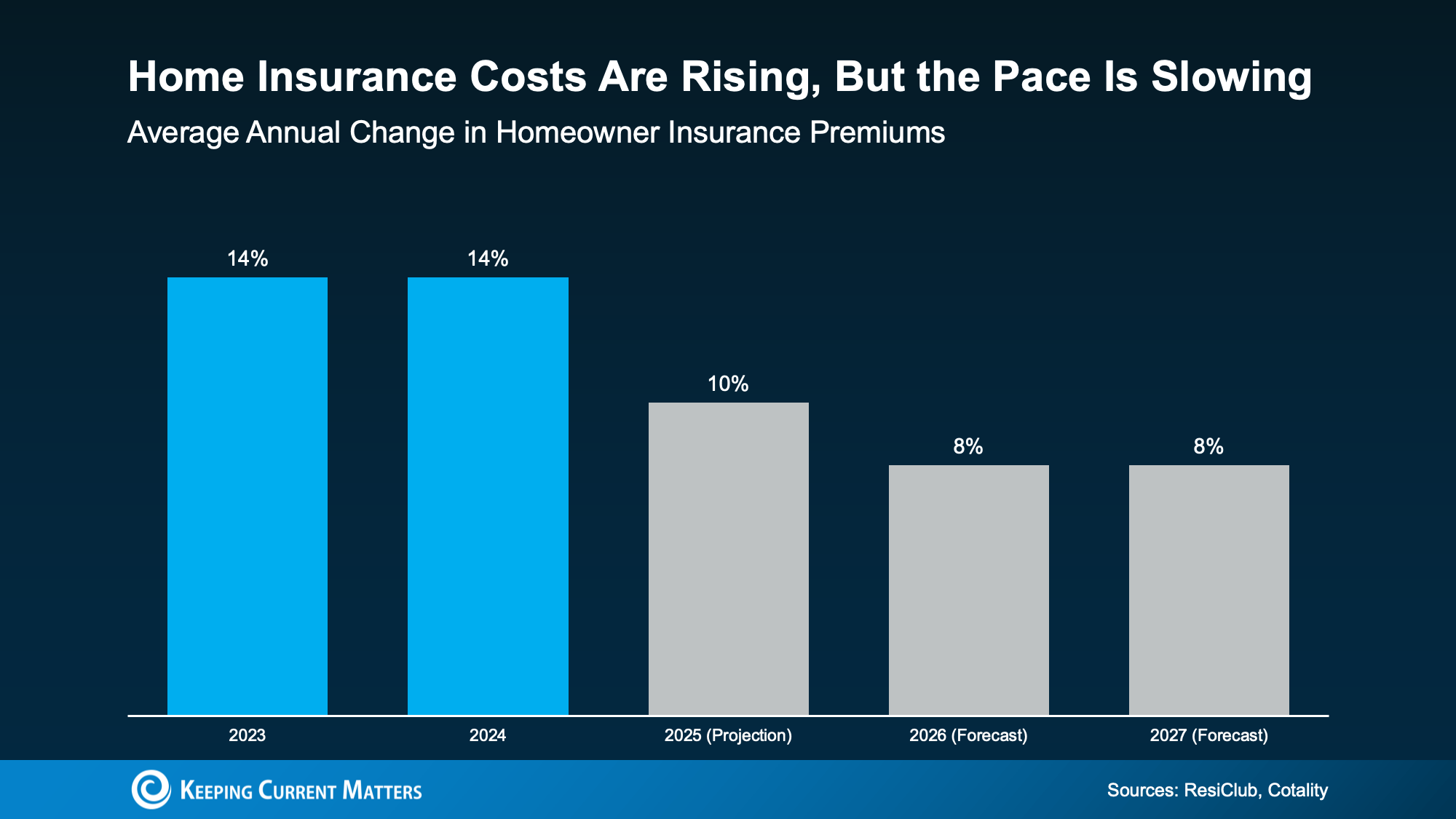
That combination adds up to higher premiums. You can see how it’s climbed recently in the graph below. Each bar marks the percentage increase in insurance costs for that calendar year.

a graph of a graph showing the cost of homeowner insuranceThe good news is, the annual pace of the increase may be starting to ease according to ResiClub and Cotality. By their count:

  • In 2023 and 2024, insurance costs went up 14% a year.
  • In 2025, they rose about 10%.
  • And in 2026 and 2027, it’s expected to go up about 8% each year.

That’s still an increase, but at least the pace is slowing down. And here’s another silver lining.

While insurance costs are rising, mortgage rates are falling. And that can help offset some of this expense. As Michael Gaines, Senior VP of Capital Markets, Cardinal Financial, explains:

Rising taxes and insurance do create pressure, but they don’t erase the benefits of a lower rate . . . A small rate improvement, paired with the right loan program and smart planning, can still make homeownership possible . . . It’s less about one factor canceling another out, and more about helping buyers layer the right solutions together.”

Costs Are Going To Be Different Depending on Where You Buy

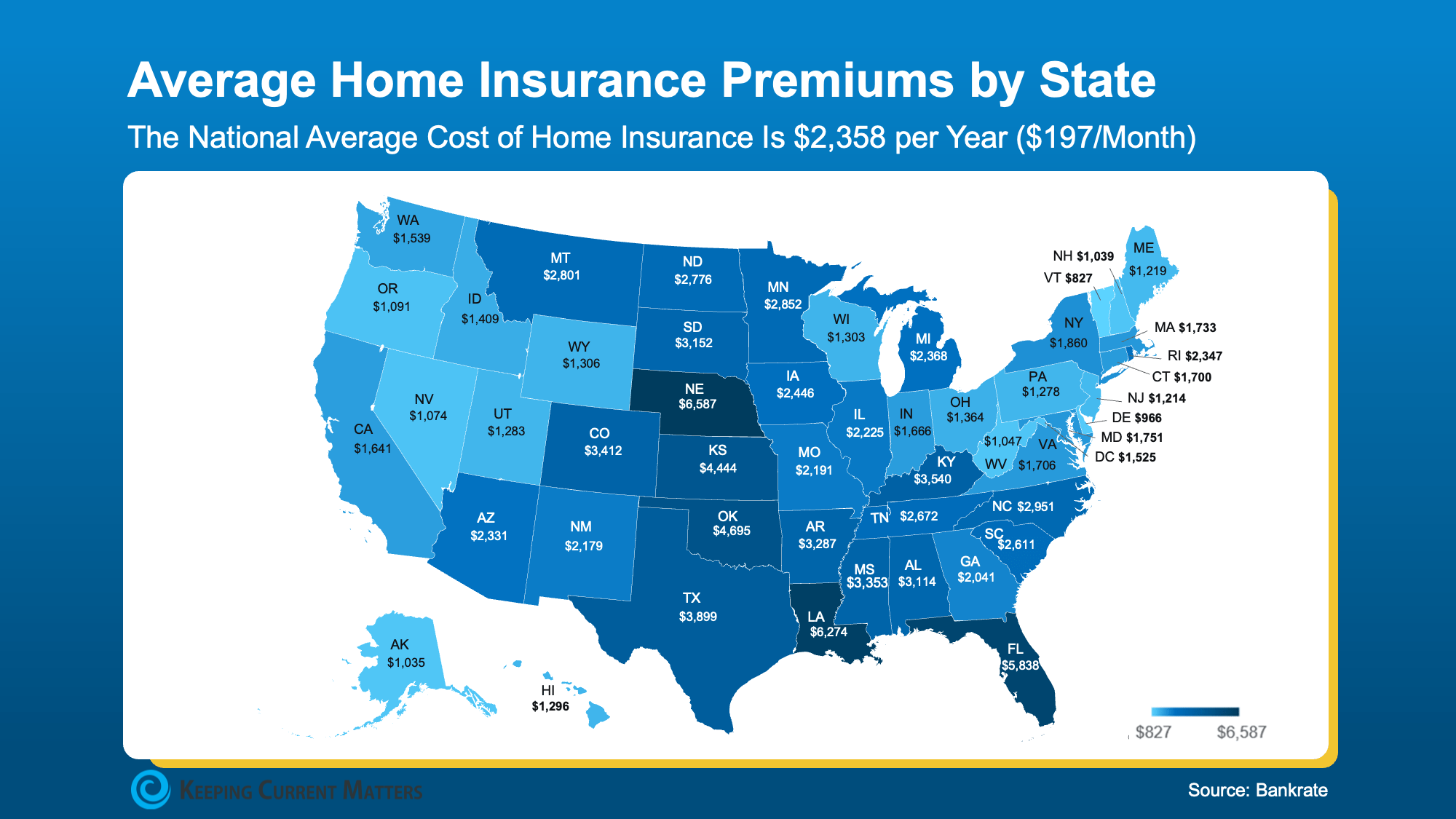
So how much do you need to budget for this? It depends on the price point and location of house, the coverage you need, and more. And just like with everything else in real estate, costs vary by area.

You can get a rough idea of your state’s typical premiums in the map below:

So, What Can You Do About It?

Generally speaking, your first insurance payment will be wrapped into your closing costs. But after that, it’ll become a recurring expense. That’s why knowing these premiums are rising is so important. It helps you factor that into your budget, so you go in with a full picture of what you can comfortably afford.

If you’re crunching the numbers and trying to find other ways to save, here are a few tips from Insurify and NerdWallet that can help you get the best insurance price possible:

  • Shop Around – Compare quotes from multiple companies.
  • Bundle Policies – Combine home and auto for discounts.
  • Ask About Discounts – Don’t miss out on savings you may qualify for.
  • Highlight Upgrades – Features like a new roof or storm windows can cut costs.
  • Improve Your Credit – A stronger credit score can mean better premiums.

Bottom Line

If you’re thinking about buying a home, don’t forget to plan ahead for your homeowner’s insurance.

While costs are rising, knowing what to expect and how to shop around can make a big difference as you’re budgeting for your purchase. Because this isn’t coverage you’ll want to skimp on. It’s your best protection for what’s likely your biggest investment.

**INFORMATION FOUND AT: keepingcurrentmatters.com**

Posted in 2026 News, Buyer Tips
Jan. 29, 2026

Why Rising Foreclosure Headlines Aren’t a Red Flag for Today’s Housing Market

Lately, you may have seen headlines talking about foreclosure activity increasing — and it’s natural to wonder if that’s a sign of trouble. The key thing to remember is that context matters. What looks dramatic in a headline often tells a very different story when you look at the full picture.

📈 Foreclosure filings have risen recently, but this increase is happening from historically very low levels — not from a place of crisis. The 32% year-over-year jump reflects a return to more typical foreclosure activity, not a surge toward dangerous levels like those seen during the 2008 housing crash.

That major downturn was driven by risky lending practices and many homeowners owing more on their mortgages than their homes were worth. Today, the market is very different: lending standards are stronger, borrowers are more qualified, and most homeowners have built significant equity in their homes. This equity gives owners options — like selling to avoid foreclosure — that weren’t available in past crises.

Industry experts describe the uptick in foreclosures as “normalization” of activity following years of historically low foreclosure counts. The numbers are still well below pre-pandemic norms and far below crisis levels.

Bottom line: while foreclosure filings are rising, they are still within a healthy range for the housing market, and there’s no evidence of a large distressed-sale wave that would threaten overall stability. Headlines that suggest otherwise may be grabbing attention — but they don’t reflect the broader reality.

More information at: keepingcurrentmatters.com

Jan. 27, 2026

High Days on Market? Don't Be So Quick to Dismiss

Don’t Dismiss a Home Just Because It’s Been on the Market

When you spot a listing that’s been sitting on the market for a while, it’s easy to start wondering: What’s wrong with it? Why hasn’t it sold? Am I missing something? That reaction used to make sense when homes were flying off the shelf in days — sometimes hours — during the pandemic buyer frenzy. But today’s market is very different.

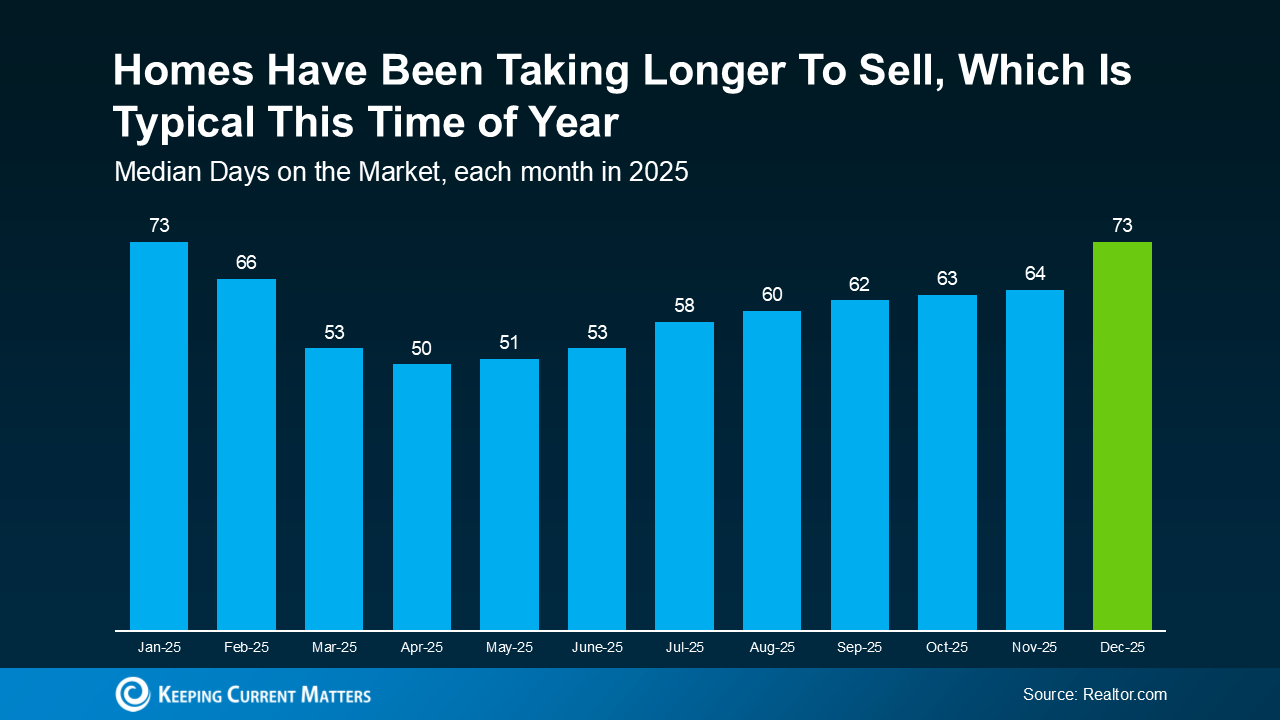
Today, homes are simply taking longer to sell overall. Inventory has grown, buyers have more choices, and the average time it takes a home to sell has climbed — not necessarily because there’s something wrong with the property, but simply because the market has normalized from the breakneck pace of recent years. A house lingering on the market for a few weeks or even a couple of months isn’t as unusual as it once was.

There are many reasons a home might stay listed longer than expected, and most of them don’t signal hidden defects:

  • There may be more homes for sale in the area, giving buyers more options.

  • The seller might have priced it slightly high at first, which can slow interest.

  • Online photos and marketing might not have shown the home at its best.

  • It simply wasn’t noticed amid flashier new listings.

  • Timing plays a role — sometimes a home is listed during a slower buying period.


None of these issues are automatic deal-breakers. And if there are problems with the property, those typically surface during inspections — giving buyers information they can use to negotiate, not necessarily a reason to walk away.


The takeaway: A home that’s been on the market for weeks or months isn’t automatically a red flag — it might just be an opportunity. With more time on the market, motivated sellers may be open to negotiation, and buyers who take the time to look deeper can unearth hidden gems that others overlooked. 

Jan. 23, 2026

Worth It Home Improvements For Sellers

Home Improvements That Can Help You Get More When You Sell

If you’re thinking about selling your home this year, now is the time to start preparing — don’t wait for spring. In today’s market, buyers have a lot more options than they did just a few years ago, so making smart updates now can help your home stand out and sell faster.

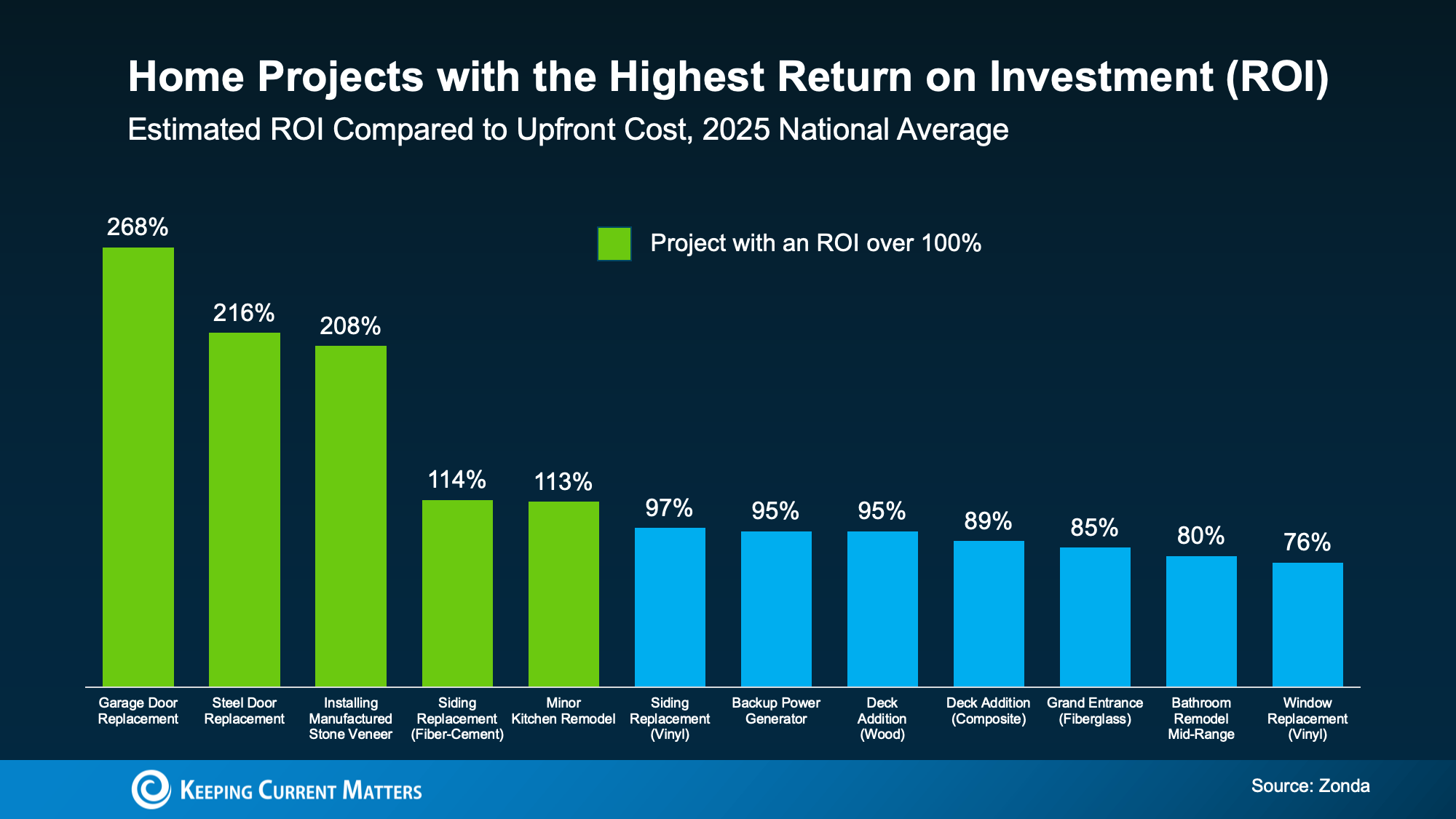
One of the best ways to make sure your investment pays off is to focus on updates with a strong return on investment (ROI) — meaning they help boost your home’s value relative to what you spend. According to industry research, some surprisingly simple projects can make a big difference without breaking the bank.


Focus on What Matters Most

Not all updates are created equal — and you don’t have to do a full renovation to get buyer attention. Sometimes, small but strategic improvements create big visual impact and increase buyer interest.

Here’s what successful sellers often focus on:

✨ Boost Curb Appeal
First impressions are huge. Simple fixes like painting the front door, refreshing shutters, trimming landscaping, or updating exterior hardware can dramatically improve how your home looks at first glance. These updates don’t cost a lot but help buyers fall in love before they step inside.

✨ Fresh, Modern Interior Touches
Inside the house, things like fresh paint in neutral tones, updated light fixtures, new cabinet hardware, and clean, styled spaces make your home feel move-in ready. Buyers are often willing to offer more for homes they feel won’t require immediate work.

✨ Don’t Ignore Needed Repairs
Even small issues — scuffed paint, loose door handles, or worn flooring — can distract buyers and lower their perceived value of the home. Taking care of deferred maintenance now can pay off when offers start coming in.

Use Data, But Tailor It to Your Market

Industry reports — such as those that track which home improvements deliver the biggest value when selling — are a helpful starting point. They show that many high-ROI projects aren’t huge renovations, but thoughtful, visual, and buyer-friendly updates.

That said, every home and local market is different. What adds value in one neighborhood might not have the same impact somewhere else. That’s why it’s wise to talk with a local real estate professional before starting any projects. They can help you pinpoint the updates that buyers in your area are looking for — and avoid ones that cost more than they return.

Posted in Seller Tips
Jan. 8, 2026

Buyers Are On The Move In 2026- Get Ready!

Momentum is quietly building in the housing market. New data from NerdWallet shows more Americans are starting to think about buying a home again. Last year, 15% of respondents said they planned to buy a home in the next 12 months. This year, that number rose to 17%.

That 2% increase might not sound like a big jump, but in a market where buyer demand has been cooling for the past few years, it’s a sign things are starting to shift. More people are feeling ready (or at least closer to ready) to take the leap and buy a home in 2026.

And if you’re in that camp and buying a home is on your goal sheet this year, this is your nudge to connect with a local agent and a trusted lender to start laying the groundwork now.

Planning To Move in Early 2026? Start with These 4 Steps

If you’re eager to get the ball rolling right away, here’s what to tackle first:

  1. Get pre-approved. A pre-approval gives you a real understanding of your buying power and what your payment could be at today’s rates. But keep in mind, Experian says most pre-approvals are only good for 30-90 days, so this step makes the most sense as you’re ready to get serious.
  2. Run the numbers. Look closely at all your expenses to come up with your budget. Consider what you’re spending on other bills and what your monthly mortgage payment would be once you buy. That way you go in with open eyes and you don’t stretch too far.
  3. Define your non-negotiables. Once you know the numbers work, figure out your must-haves. This includes your desired location, commute, layout, school district, lifestyle needs, etc. Getting clear on these now makes decisions easier once you start looking at homes.
  4. Choose your agent early. Look at reviews online and talk to multiple agents to find one you trust that you also click with. The right agent does more than show homes. They help you understand pricing, competition, timing, and strategy before you ever write an offer.

Thinking about Buying Later in the Year? This Is Still Your Window To Prepare

Even if buying feels like a late-2026 goal, this moment still matters. The buyers who feel the most confident later are usually the ones who quietly prepared earlier.

That doesn’t mean big financial commitments or major lifestyle changes. It just means setting yourself up so you’re ready when the timing is right. Here are a few low-stress ways to do that:

  1. Work on your credit. While you don’t need to have perfect credit to buy a home, your score can have an impact on your loan terms and even your mortgage rate. So, working to bring up your score has its perks. Paying down debt now and making payments on time can help bring your score up.
  2. Automate your savings. If you have to remember to transfer money into your homebuying savings manually, you may forget to do it. So, you may want to set up automatic transfers to drive consistency and remove the temptation to spend the money elsewhere.
  3. Lean into your side hustles: Do you have a gig you do (or have done before) to net some extra cash? Taking on part-time work, freelance jobs, or picking up a side hustle can help give your savings a boost.
  4. Put any unexpected cash to good use: If you get any sudden windfalls, like a tax refund, bonus, inheritance, or cash gift from family, put it toward your house fund. You’ll thank yourself later.

The common thread here? The right prep work makes a difference.

Bottom Line

If buying a home in 2026 is on your radar, start the conversation now. Not to rush a decision, but to give yourself time and clarity.

Because every move (whether it’s next year or later) is smoother when it starts with a plan. And if you need help coming up with one that works, connect with a trusted agent and lender.

Jan. 6, 2026

So Your House Didn't Sell. Now What?

So, if your house didn’t sell, don’t stress. You’re not stuck. You may just need a different professional with a different approach.

Because, at the end of the day, maybe the problem wasn’t the market or your home. It was the strategy. 

Let’s break down what might’ve gone wrong – and how a fresh perspective can help you have a winning plan this time.

1. The Price Was Working Against You

A lot of sellers are aiming a bit too high these days, hoping to match the price their neighbor got during the 2021 frenzy. And that’s not working anymore.

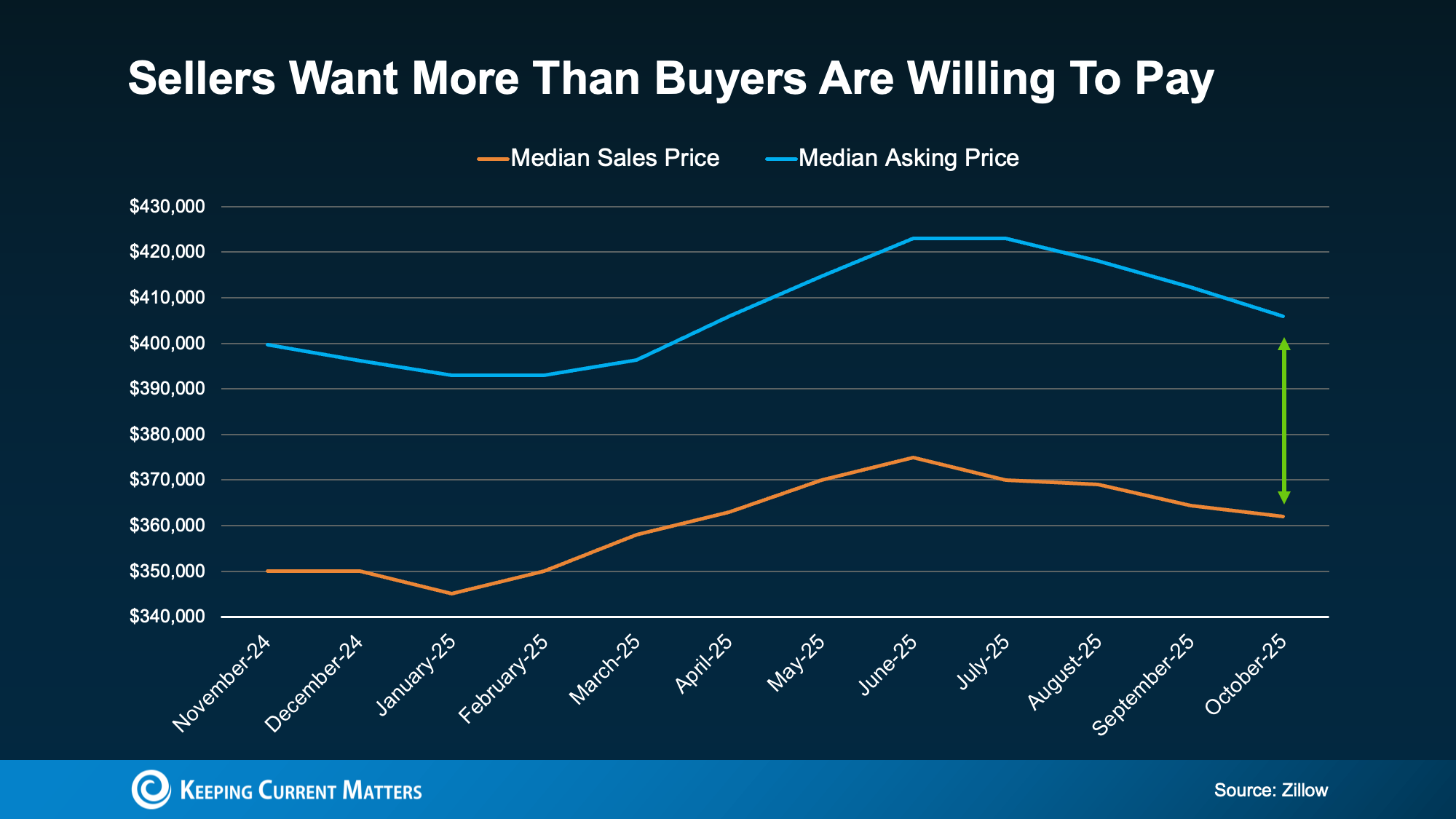
Today’s buyers are being more selective. Even a slightly overpriced home will get overlooked today. And once your listing starts to go stale, it’s hard to regain momentum. The result? A widening gap between seller and buyer expectations (see graph below). That could be what cost you your sale.

The Fix: Get a fresh pricing analysis rooted in what’s happening right now in your neighborhood – not what happened in 2021. Sometimes even a small adjustment can bring the right buyers through the door. HousingWire reports many successful sellers only had to reduce their price by about 4% to get real traction. In the grand scheme of selling a home, it’s really not that much.
2. Your House Didn’t Show Well

You only get one shot at a first impression. If the listing photos didn’t pop, the house wasn’t staged well, or it wasn’t updated, most buyers today will skip over it without ever scheduling a showing. And even if buyers did pass through, small things like scuffed walls, outdated light fixtures, or a wobbly doorknob can turn them away.

The Fix: Let’s walk through your house with fresh eyes to see if there are any areas that may have been sticking points inside and out. Sometimes simple updates (new paint, updated lighting, fresh landscaping, or better listing photos) can completely change how buyers react. 

3. It Didn’t Get the Right Exposure

If your home didn’t sell, chances are it wasn’t getting the visibility it deserved. Generic flyers and a few online photos aren’t enough anymore. Today’s top agents are using highly targeted digital marketing, social media strategies, custom video content, and more to get your listing in front of the right buyers at the right time.

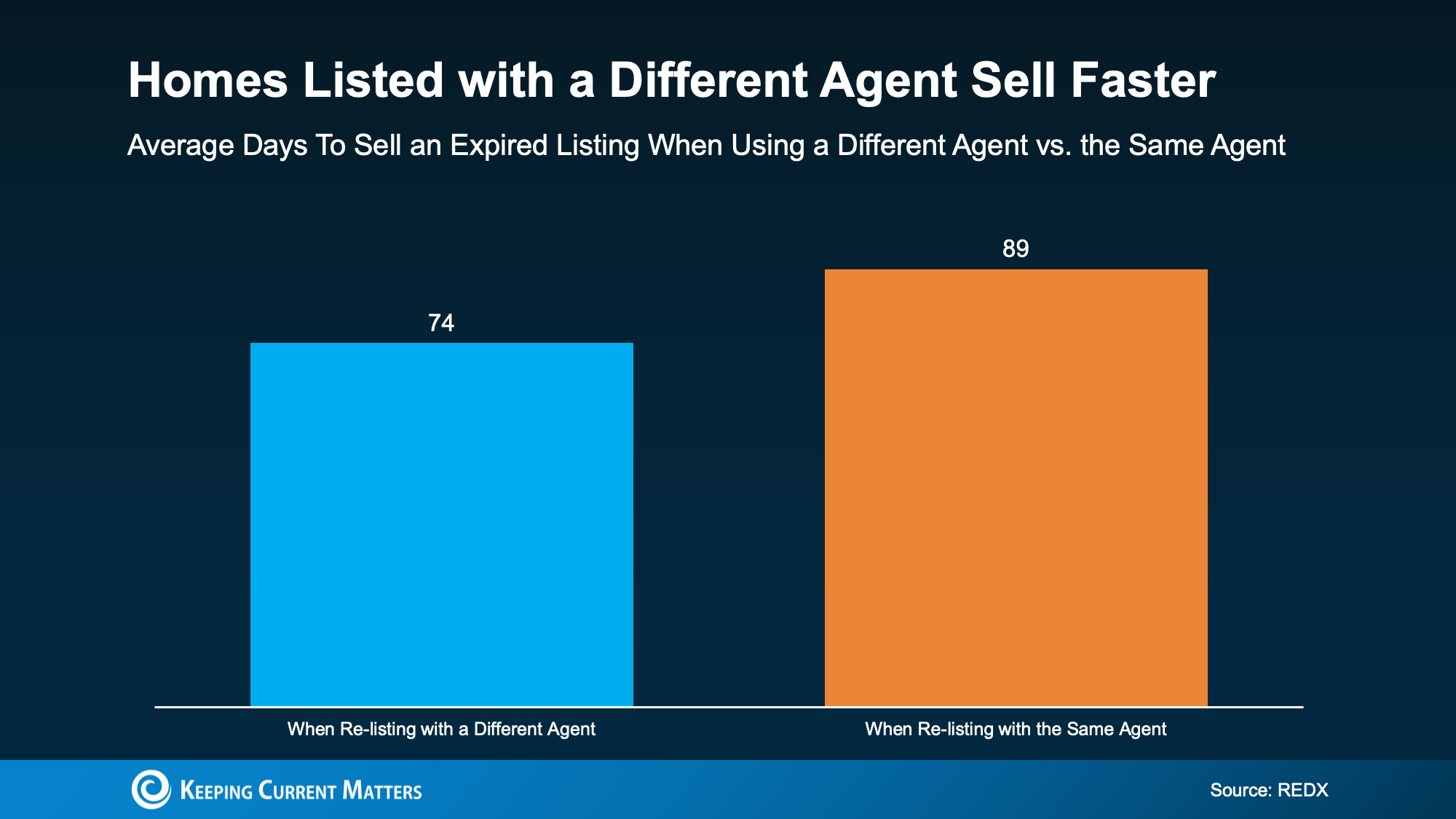
The Fix: We have to do more than just put your house online and hope it sells. With the right pricing, staging, and marketing, your house can still sell. It may even happen faster if you switch agents. Here’s a real-world example (see graph below):

4. You Weren’t Willing To Negotiate

In this market, flexibility matters. If you weren’t open to negotiating on repairs, closing costs, or other concessions, buyers may have walked, especially because many now expect at least some give-and-take. 

The Fix: Be willing to meet buyers where they are. The goal is to get the deal done – and sometimes that means getting creative to cross the finish line. Home values have increased by 48.5% over the last five years, so you likely have enough wiggle room to offer some perks without sacrificing your bottom line.

Bottom Line

If your house didn’t sell and your listing has expired, you’re not stuck. You just need a better plan. And maybe, a better partner.

Same house. Different strategy. Completely different results. 

If you’re ready to understand what held your sale back (and how to get it right this time) get a different agent’s perspective. A few strategic shifts could be all it takes to get your move back on track.

Dec. 29, 2025

3 Smart Ways Realtors Can Support First-Time Homebuyers ????

3 Smart Ways Realtors Can Support First-Time Homebuyers

First-time homebuyers are a growing yet often nervous group in today’s market, and many don’t know where to start. As agents, we’re in a great position to guide them with confidence and knowledge — helping them turn the dream of homeownership into reality. Texas Real Estate

1. Connect Buyers to Helpful Resources

Many first-time buyers don’t realize the programs and assistance options available to them. Sharing resources like the Texas Department of Housing and Community Affairs Homebuyer Program, first-time buyer grants from the Texas State Affordable Housing Corporation, and guides from the Texas Real Estate Commission can make a huge difference in their homebuying journey. Texas Real Estate

There are also statewide and local programs that offer down payment help, educational courses, and special loan options — all designed to reduce stress and costs for first-time buyers. The Texas Homebuyers Program+1

2. Educate Them Every Step of the Way

Most first-time buyers are learning as they go. They may’ve heard bits and pieces from friends, family, or the internet — but that can lead to outdated or incorrect info. Taking time to explain each stage of the transaction — from pre-approval to closing — helps them feel confident and informed. Texas Real Estate

Sharing your knowledge — and being available to answer questions — builds trust and makes the process smoother for everyone involved.

3. Walk Through the Transaction Together

Buying a home has a lot of moving parts. First-timers can feel overwhelmed when they don’t know what’s coming next. By guiding them through what to expect, when it’s happening, and why it matters, you help reduce fear and uncertainty. Texas Real Estate

Stay in regular contact, shine a light on each milestone, and make them feel supported from “just browsing” all the way to handing over the keys.


Bottom Line:
Helping first-time buyers isn’t just about finding a home — it’s about educating, empowering, and guiding them through one of the most exciting decisions of their life. The more value you bring, the stronger the relationships you build. 🏠✨